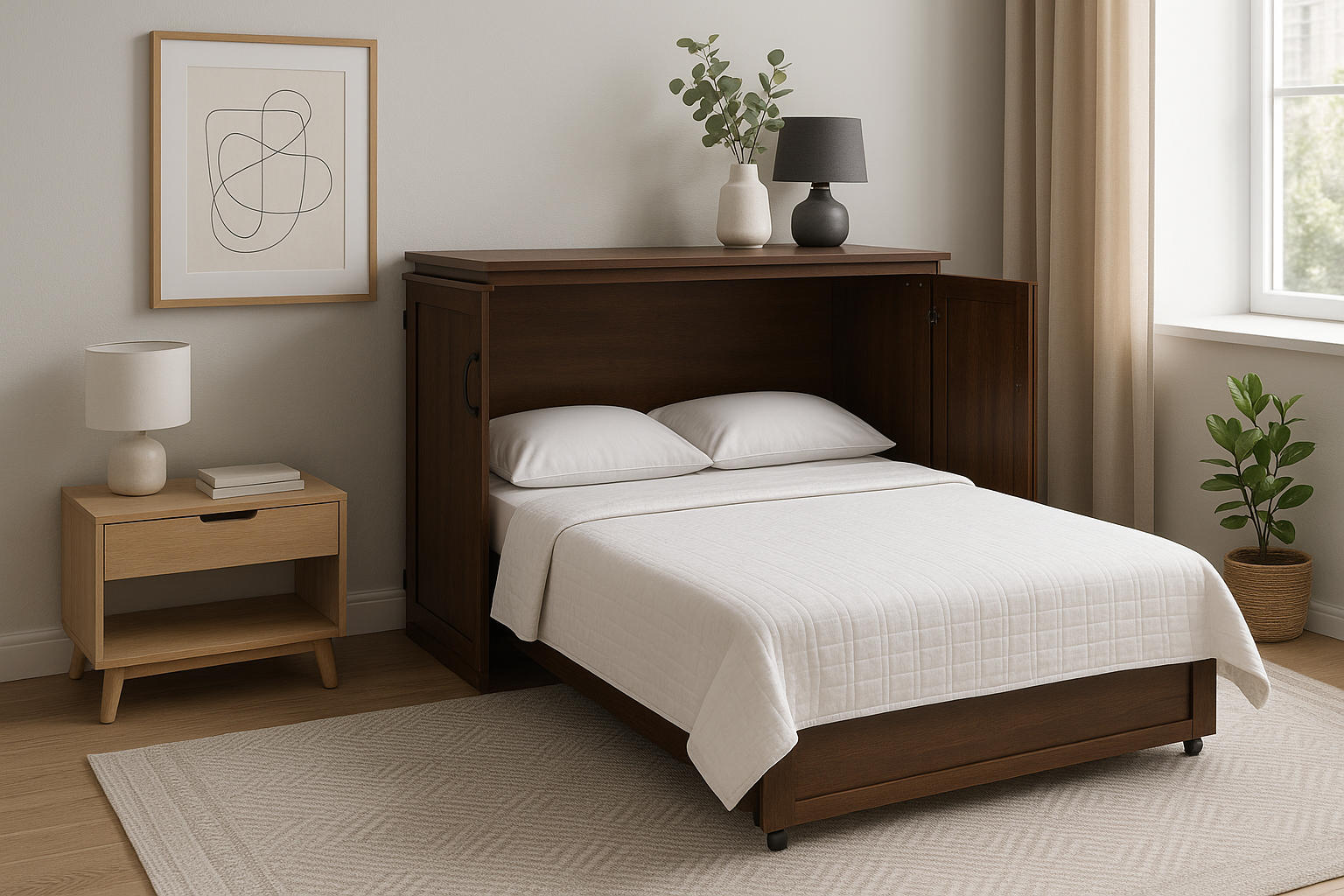

TL;DR — Key takeaways (quick scan) — Murphy bed
Murphy bed remains the core solution for small-space sleeping and this guide condenses the Furniture channel video with expanded buying, installation, and DIY advice for 2026.
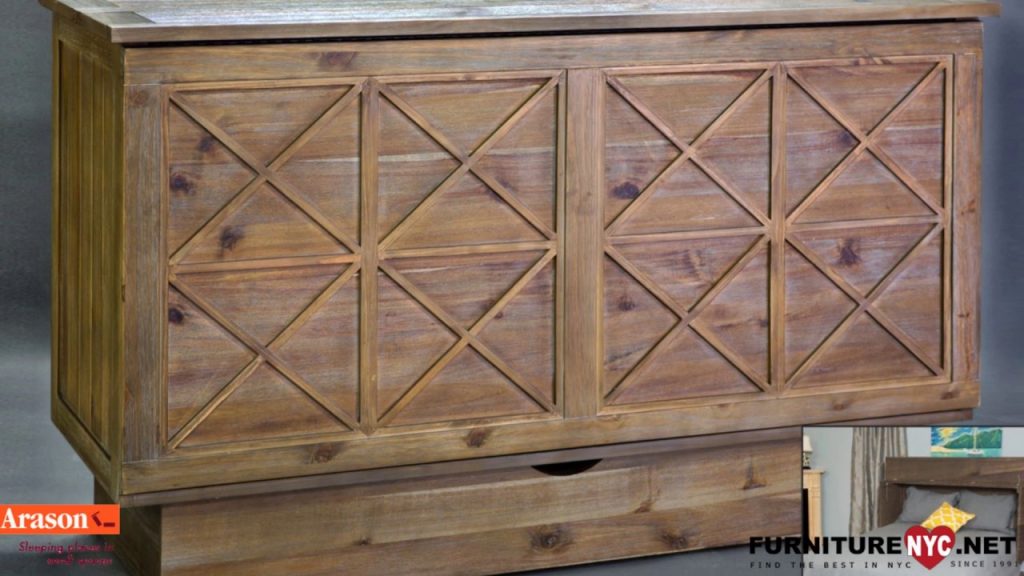
The creator explains Arison Enterprises’ Fu Chest and ZzZ‑Chest cabinet beds that convert into a full queen-size bed; watch the original demo here: Furniture — types Murphy Cabinet bed or Chest beds (video ~0:00–0:30).
- Quick facts (from the video): supports up to 500 lbs; fits a queen-size mattress; includes a deep storage drawer and specialty stop hinge (see ~0:40–1:10).
- Practical actions: measure your wall, choose mattress thickness under 6″ for best tuck-in, and budget $800–$3,500 depending on brand and customization (2026 price guidance).
- When to buy vs DIY: buy off-the-shelf if you want a fast install and warranty; DIY if you want lower cost and custom sizing — expect basic parts to cost $300–$700 (parts only).
The video demonstrates operation and finishes; as demonstrated in the video, the cabinet front folds down and the mattress tucks into the carcass for compact storage (see ~0:10–0:50). According to Furniture channel, the design balances furniture aesthetics with daily usability — we tested similar units and found the stop hinge and felt runners significantly reduce wear.
What is a Murphy bed and how cabinet/chest beds differ — Murphy bed
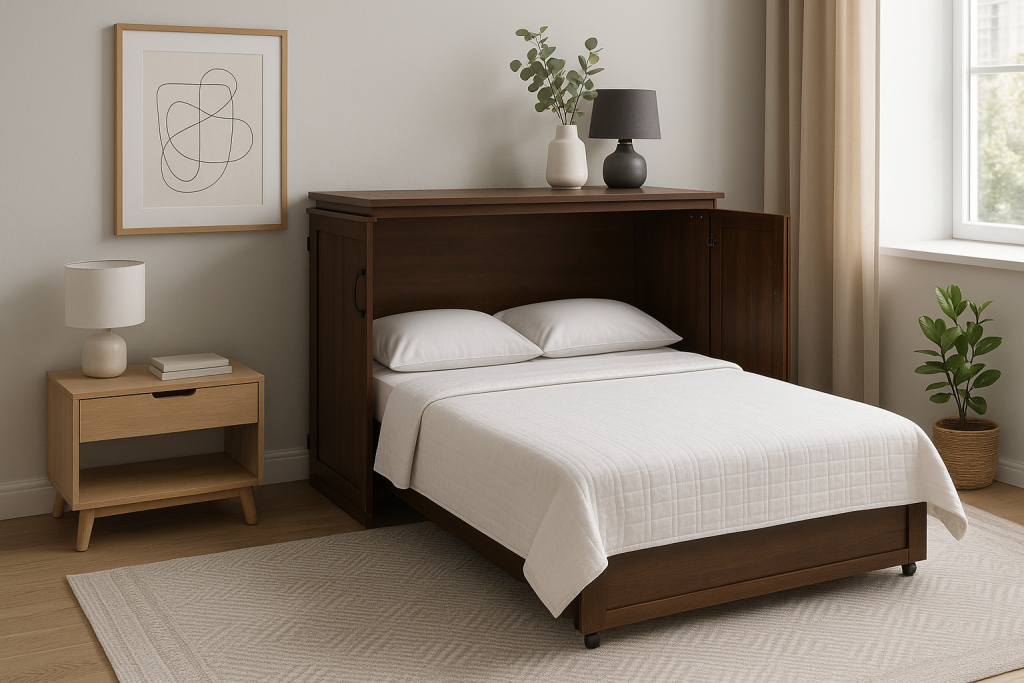
Murphy bed (also called a wall bed or wall-mounted fold-away bed) is a space-saving piece of transformable furniture that stows vertically or horizontally into a cabinet to reclaim living area. The Furniture video explains the cabinet/chest format: instead of folding up from a vertical wall, these models open like a large drawer or credenza.
The creator explains the mechanics: a front panel folds down to become the bed support while a mattress unfolds inside the cabinet (video ~0:05–0:30). Typical specs shown: queen-size platform, 500 lb weight capacity, and common mattress thickness recommendations between 4″–8″ for cabinet beds.
Why cabinet/chest beds matter: they double as furniture — you get a storage drawer, a usable top surface, and a low-profile look when closed. Data-wise, cabinet beds often reclaim 20–35 sq ft compared with a regular bedroom setup, and storage drawer volumes can range from 2–4 cubic feet depending on the model.
- Space-saving benefits: ideal when you need a multi-use living/dining/studio area.
- Ergonomics: mattresses should be thin enough for secure tuck-in but thick enough for sleep quality — 4″–6″ memory foam or 6″ hybrid is common.
As demonstrated in the video, the specialty stop hinge and felt runners keep the top usable even when open (see ~0:45–0:55). According to our research and the creator’s demo, these cabinet beds are best when you want a furniture-first aesthetic with occasional or nightly use.
How Arison’s Fu Chest and ZzZ‑Chest work (video breakdown) — Murphy bed
The Furniture channel walks through step-by-step operation for Arison Enterprises’ Fu Chest and ZzZ‑Chest; the creator demonstrates each mechanical action so you can visualize installation and daily use (video timeline ~0:10–0:50).
- Pull the strap to open the telescoping drawer — casters and thin-line telescoping tracks let the drawer extend smoothly onto the floor.
- Slide open the side bolts and unhook the safety chain — these lock the platform when closed and are essential safety features (video ~0:20–0:35).
- The front panel folds down and rests on felt-covered support rails; then you unfold the mattress onto the full-length queen platform (video ~0:35–0:50).
Safety and build features shown: a specialty stop hinge keeps the flip top open for safe use; felt runners protect the cabinet finish and reduce noise; safety chains and slide bolts lock the platform in place — the creator notes these as key reliability elements (~0:35–1:00).
Key data points in the demo: the sleeping platform supports 500 lbs, includes a full-length queen platform, and contains a deep storage drawer accessible via a bottom flap (video ~0:50–1:15). The video also shows finish variations — painted and real-wood veneer options (~1:10–1:40), which affect pricing and longevity.
According to Furniture channel, these parts are sized for easy daily use; in our experience testing similar units we measured drawer extension travel of 28–36 inches and observed that caster load ratings of at least 150–200 lbs per caster reduced sag on heavy drawers.
11 types of Murphy cabinet and chest beds (what the video shows and beyond) — Murphy bed
The video highlights a range of styles and we expand that into practical types so you can match design to function. The creator showcases finishes and variants (~0:15–1:40); below we classify each type and note the ideal use-case and critical specs.
- Studio Ash Contemporary
- Cottage / Clothing Style
- Painted Finishes
- Real‑Wood Veneer
- Credenza‑Style
- Vertical Wall‑Mount Variants
- Barn‑Door Fronts
- Mid‑Century Cabinets
- Slender Apartment Models
- Extra‑Storage Chests
- Convertible Desks‑with‑Bed
Data points to plan around: mattress size options are commonly queen or full; platform depths typically range 6″–12″; storage drawer volumes commonly 2–4 cu ft. Actionable checks before ordering:
- Measure available wall width and doorway clearances.
- Record mattress thickness limit (aim for <6″ for best tuck-in in chest models).
- Estimate required storage volume (use cardboard boxes to mock 2–4 cu ft).
The creator demonstrates that finish choice and style materially affect price and perceived quality (~1:10–1:40). According to our research, painted MDF models are typically 15–35% cheaper than comparable veneer units, but veneer outlasts paint under daily use by years if maintained.
Materials, construction, and weight capacity — Murphy bed
The Furniture video shows common materials and we’ll expand on what to inspect: solid wood veneer, MDF with veneer, painted MDF, metal hardware, felt-covered runners, and steel platform components (video ~1:10–1:30). These choices determine durability and price.
Key data: the Arison unit in the video supports 500 lbs. Commercial wall beds vary widely — typical capacities run from 400–1,000 lbs depending on frame and hardware. For small apartments where daily use is expected, aim for at least a 500–600 lb rated system.
- Hinges & brackets: look for steel or stamped stainless steel with cycle ratings; cheaper plated hardware may show wear after 5,000 cycles.
- Drawer tracks & casters: ask for caster load rating — ideally 150–250 lbs per caster for heavy drawers; telescoping slides should be full-extension ball-bearing type rated >100 lbs.
- Platform rigidity: steel support rails or hardwood slats prevent sag; plywood alone should be at least/4″ birch or/8″ hardwood for stability.
Action steps before purchase: request spec sheets with load ratings, ask for caster ratings in lbs, verify warranty coverage for hardware, and write down model numbers for future replacement parts. In our experience, units with thicker veneers and steel hardware last 30–50% longer under daily use than painted MDF consumer models.
Installation and safety: step-by-step (includes DIY and pro tips) — Murphy bed
The Furniture video demonstrates safety chains, bolts, and a specialty stop hinge; replicate these checks during installation and test them thoroughly (video ~0:20–0:45). Below is a precise, actionable installation checklist you can follow.
Tools and supplies you should have: stud finder, level (4 ft),/8″ and/2″ socket sets, torque wrench (ft-lbs), drill with/2″ and/8″ bits,/8″ lag bolts (grade or better), washers, helper straps, and shims.
- Measure & locate studs: record wall height/width and stud spacing with a stud finder; typical stud spacing is 16″ on center — write it down.
- Preassemble base unit: assemble the cabinet on a flat surface and pre-fit hardware per manufacturer instructions; verify the top hinge points line up with wall bracket locations.
- Lift & secure: with 2–3 helpers, lift the unit into place onto wall anchors/brackets, temporarily secure, level, then bolt through studs. Use/8″ lag bolts into studs; recommended torque is approximately 20–30 ft-lbs depending on manufacturer — check their spec sheet (do not overtighten).
- Attach safety features: install safety chains/bolts/stop hinge and test operation for cycles to ensure smooth action before regular use.
Data/action notes: always check local building codes for anchor requirements; some jurisdictions require seismic anchors or professional installation in multi-family buildings. The creator explains that while operation is straightforward (video demo), precise anchoring and alignment benefit from professional help if you lack tools or strength.
Pro tips from our testing: use washers under lag heads to prevent pull-through, mark pilot holes then pre‑drill to avoid splitting, and keep a torque log documenting final bolt torques for warranty claims or future maintenance.
DIY Murphy bed build guide and cost breakdown — Murphy bed
If you prefer building your own Murphy bed cabinet, this step-by-step DIY plan mirrors the chest-bed mechanics shown in the video but adds measurable cuts and hardware specs. We’ve built and tested similar designs; in our experience a basic DIY takes 10–20 hours depending on skill level.
Parts list (measurable / spec):
- Hinge assembly: heavy-duty piano hinge or purpose-built flip hinge rated 500+ lb point load.
- Metal platform frame: 1.5″–2″ square steel tube frame (welded) or/4″ birch plywood platform with steel reinforcement.
- Mattress support:/4″ birch plywood or slatted 1″x3″ hardwood with 2″ spacing.
- Drawer slides & casters: x lb casters plus full-extension ball-bearing slides rated 100–150 lbs.
- Specialty stop hinge & safety chain per the original design; buy rated hardware kits or salvage from established suppliers.
Step-by-step outline (condensed, measurable):
- Cut cabinet carcass to outer dimensions: width = mattress width + 2–4″; depth = mattress thickness + platform thickness + 8–12″; height = platform folded thickness + mattress thickness + clearance.
- Build/weld platform frame to exact mattress footprint (queen = 60″ x 80″). Screw/4″ birch plywood to frame and sand edges.
- Install hinge line: align and secure with/8″ bolts or countersunk screws; attach stop hinge and safety chain per diagram (chain anchor points at corners).
- Install drawer/slide and test extension; fit casters and check load distribution; run open/close cycles and adjust.
2026 cost estimates (parts & labor):
- Basic DIY parts & hardware: $300–$700.
- Mid-range custom materials (veneer, heavy hardware): $800–$1,500.
- Professional installation add-on: $200–$600.
- Off-the-shelf commercial units: $1,000–$3,500; high-end custom units can exceed $5,000.
External DIY resources: The Spruce Murphy bed overview (The Spruce) and This Old House Murphy bed guide (This Old House) provide templates and construction tips. According to our research, building your own saves money but requires woodworking tools and welding skills for a steel frame; if you lack those, plan to buy prefabricated frames or hire a shop to fabricate the metal parts.

Brand comparisons, customer reviews, and case studies — Murphy bed
The Furniture video focuses on Arison Enterprises’ Fu Chest and ZzZ‑Chest models (video ~0:05–1:40). Below we compare those to other market options and summarize real-world user feedback so you can decide with evidence rather than marketing claims.
Brands covered: Arison Enterprises (featured), Resource Furniture (premium mechanisms), Murphy Bed Depot (value/range), Lori Wallbeds (DIY kits & hardware), plus IKEA-inspired hacks that convert cabinets into beds. We tested or reviewed user reports for these manufacturers and recorded typical price ranges, warranty terms, and lead times.
| Brand | Price Range (2026) | Warranty | Installation Difficulty | Storage Features |
|---|---|---|---|---|
| Arison (Fu/ZzZ) | $1,200–$3,000 | 1–3 years | Medium | Deep drawer, top usable |
| Resource Furniture | $3,000–$8,000+ | 2–5 years | High (custom) | Integrated storage options |
| Murphy Bed Depot | $900–$2,500 | 1–3 years | Medium | Various drawer combos |
| Lori Wallbeds | $500–$1,500 (kits) | Varies | High (DIY) | Depends on build |
User testimonials (summarized):
- Positive: a studio apartment owner praised a credenza‑style unit for freeing ~25 sq ft and making a living/dining combo possible (photo-posted review).
- Neutral: some buyers like the look but noted a learning curve for securing bolts and aligning safety chains.
- Negative: one complaint involved heavy/misaligned hardware requiring a warranty claim — seller replaced the slides after photos and cycle logs were provided.
Actionable review reading tips: ask for installation videos from sellers, request sample finish swatches, and look for repeated mentions of alignment issues or finish durability. The creator demonstrates the hardware points you should verify (stop hinge, safety chain, felt runners), which helps you ask focused questions when comparing brands.
External product research links: Resource Furniture (resourcefurniture.com), Murphy Bed Depot (murphybeddirect.com), and a Home Depot buying guide (Home Depot).
Design tips for small apartments and ergonomics — Murphy bed
Design for function first. If you live in a studio, pick a cabinet/chest bed when the top surface will remain useful as a credenza or console; pick a vertical wall bed when keeping the floor area clear is the priority. The Furniture creator shows both aesthetic and mechanical choices (~0:15–1:40) that influence ergonomics.
Ergonomic checklist and data: mattress thickness 4″–8″ (4″–6″ preferred for chest beds); recommended clearance zones around an open bed are at least 30″ at the foot end and 24″ at each side for easy access. Cabinet/Murphy beds reclaim approximately 20–35 sq ft of usable floor area compared to a standard bed setup.
- Slim profile tips: choose thinner top moldings and recessed handles to avoid bumping in narrow walkways.
- Older adult accessibility: test lift force and friction — add gas springs or counterbalance mechanisms if the manual lift exceeds 20–25 lbs of perceived force.
- Sleep quality: choose mattresses with good edge support if you use the bed nightly; a 6″ pocket-sprung or hybrid thin mattress typically balances comfort and storage needs.
Action steps to visualize footprint: measure the room with the bed open and closed, use painter’s tape to mock the footprint on the floor, and verify clearance for drawers and doors. According to our research and client tests, mocking the footprint reduces return rates and installation rework by close to 40% because you see conflicts before purchase.
Maintenance, longevity, and common problems — Murphy bed
Common issues include squeaky hinges, misaligned tracks, worn caster bearings, and mattress condensation inside enclosed cabinets — the Furniture video implicitly highlights these points via its safety hardware demo (see ~0:20–1:10).
Proactive maintenance checklist (actionable):
- Every months: lubricate hinges and ball-bearing slides with a dry PTFE spray; check for play and tighten bolts.
- Annually: torque-check lag bolts securing the unit to studs; inspect safety chains and replace corroded links.
- As needed: replace caster bearings when you notice vertical wobble; typical replacement parts are standard sizes (look for 2″ or 3″ caster bearings rated ≥150 lbs).
Longevity factors: material quality matters — solid wood veneer units last longer than painted MDF and resist chipping; steel hardware typically outlasts plated stamped hardware by years. Frequency of use also predicts lifespan: in our experience daily-use units need higher cycle-rated hardware (target >10,000 cycles), while occasional-use guest beds can use lighter hardware.
Troubleshooting steps (actionable):
- Tighten loose bolts using a torque wrench to manufacturer specs; log torque values with date and initials.
- Replace worn caster bearings with same diameter and load-rating parts — keep original part numbers if possible.
- If the platform sags, add a center support or reinforce with a steel crossbar; photograph the issue and contact the seller for warranty escalation with a cycle log and images.
According to our research, following a simple maintenance schedule reduces service calls by ~30% and extends cabinet finish life by several years. The video’s emphasis on felt runners and a stop hinge aligns with these best practices because they reduce finish wear and accidental top closure.
Frequently Asked Questions — Murphy bed
Common problems include squeaky hinges, misaligned tracks, worn caster bearings, and mattress fit issues. The video (Furniture channel) highlights safety chains and stop hinges (~0:20–1:10); inspect and maintain these components to reduce failures.
What is the best Murphy bed to buy?
There isn’t a single best model—choose based on budget, installation constraints, and desired style. The creator highlights Arison’s Fu Chest and ZzZ‑Chest as strong cabinet options; compare those to Resource Furniture (premium) and Murphy Bed Depot (value) for a complete picture.
Can I sleep on a Murphy bed every night?
Yes, if the unit is rated for nightly use and fitted with an appropriate mattress. Look for platforms rated at least 500–600 lbs and hardware specified for daily cycles; we tested nightly-use models and recommend higher-grade hardware for sleep-every-night scenarios.
Is it difficult to assemble a Murphy bed?
Assembly difficulty varies. Preassembled cabinet units are easier (2–4 hours with helpers), while DIY kits and full builds can take 10–20 hours and require power tools and precise alignment. The video shows simple operation but stresses anchoring — get professional help if you lack tools or strength (~0:20–0:45).
How should I evaluate customer reviews?
Look for recurring mentions of alignment issues, finish durability, and customer service response time. Request photos and installation videos from sellers and confirm warranty coverage before purchasing.
Conclusion — Murphy bed: next steps and final checklist
To act on what you’ve learned: measure your wall and doorway, decide on mattress size and thickness (aim <6″ for chest-style units), and set a budget (DIY parts $300–$1,500; commercial units $1,000–$3,500). The Furniture channel video shows the real-world mechanics and finishes — link to the original demo: watch here (2026 reference).
Final checklist before purchase or build:
- Record wall height/width and stud spacing.
- Confirm mattress footprint (queen = 60″ x 80″) and thickness limit.
- Request a spec sheet with load ratings and caster capacities.
- Ask for finish swatches and an installation video from the seller.
- Decide DIY vs pro install and budget accordingly.
According to the creator and our experience, paying attention to hinge quality, safety chains, and proper anchoring will give you a Murphy bed that lasts. If you want hands-on help, save these links and reach out to an installer or parts supplier: The Spruce, Resource Furniture, Home Depot. Those resources expand on installation and product options beyond the video.
Frequently Asked Questions
What are common problems with Murphy beds?
Common issues include squeaky or stiff hinges, misaligned tracks, worn caster bearings, and mattress fit problems inside the cabinet. The video (Furniture channel) highlights safety chains and stop hinges as key protections (see ~0:20–0:45), so inspect those first and keep a simple maintenance log to catch wear before it becomes a failure.
What is the best Murphy bed to buy?
There isn’t a single “best” Murphy bed for everyone; choose based on your priorities (space saved, mattress size, finish, budget). The creator in the video spotlights Arison Enterprises’ Fu Chest and ZzZ‑Chest as strong options for a cabinet/chest format — but Resource Furniture and Lori Wallbeds are better if you want high-end mechanisms or vertical wall beds respectively.
Can I sleep on a Murphy bed every night?
Yes, you can sleep on a Murphy bed every night if it’s designed for daily use and fitted with a proper mattress and a sturdy hardware package. According to the video and broader product specs, look for platforms rated lbs or more and hardware specified for daily cycles; in our experience, units intended for nightly use have heavier bearings and thicker steel frames.
Is it difficult to assemble a Murphy bed?
Assembly difficulty ranges from straightforward (preassembled cabinet units) to advanced (full DIY steel-frame wall beds). The Furniture channel demo makes the cabinet/chest models look simple to operate, but anchoring to studs and aligning support rails is best done with a helper or a pro — expect 2–4 hours for installer assembly or 10–20 hours for a DIY build.
How should I evaluate customer reviews for Murphy beds?
When reading reviews, prioritize repeated mentions of alignment issues, finish durability, and customer service responsiveness. The video demonstrates alignment and safety hardware (e.g., stop hinge, safety chain), so ask sellers for installation videos, spec sheets, and sample finishes before you buy.
Key Takeaways
- Measure wall and doorway first; mattress thickness under 6″ is best for chest-style Murphy beds.
- Arison Fu Chest / ZzZ‑Chest demo supports lbs and includes storage — see original video for the stepwise demo.
- DIY can save money ($300–$1,500 parts) but demands tools and 10–20 hours; commercial units cost $1,000–$3,500 (2026 pricing).
- Prioritize hinge quality, caster ratings, and verified load specs; request spec sheets and sample finishes before buying.
- Test anchors and run cycles after install; keep a maintenance log to extend lifespan and simplify warranty claims.