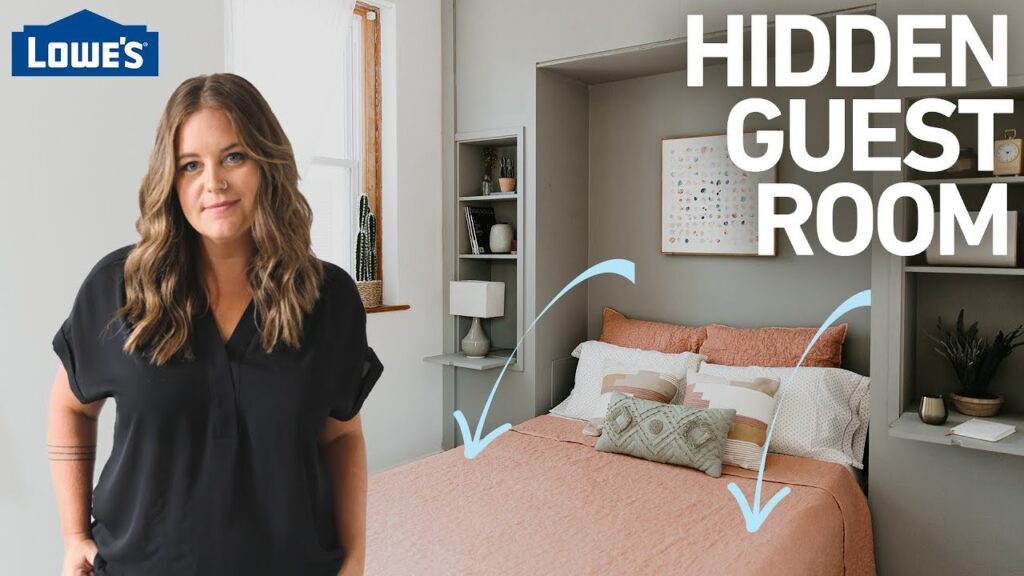
Looking to create a hidden guest room with a Murphy bed? In this video uploaded by Lowe’s Home Improvement, you’ll find all the steps and instructions you need to accomplish this project. Hosted by Monica Mangin from “The Weekender,” the video demonstrates the process of building a hidden guest room behind a hidden wall. The project involves taking measurements, building a bed frame, framing the wall, adding hinges for the bed, and creating custom shelving for additional storage. The video also shows how to add trimming, molding, and industrial-strength velcro to give the bed a finished look. By following the instructions in the video, you’ll be able to create a multi-purpose space that acts as a guest room when needed, without taking up unnecessary space in your home.
Measurements and Planning
Determining the size of the wall
Before starting the project, it is important to determine the size of the wall that will house the hidden guest room. Begin by measuring the available space in the room. In the case of this project, the room is approximately 10 by 12 feet. This size is fairly typical for a bedroom.
Next, consider the usage of the room. The goal is to have a dual-purpose space that can be used as a guest room when needed, but also serve another function when guests are not present. In this case, the idea is to hide the guest room portion, including the bed and nightstands, behind a hidden wall. By doing this, only about two feet of space will be sacrificed, allowing for a completely multi-purpose room.
To determine the size of the wall, start by knowing the dimensions of the mattress that will be used. In this project, a queen-sized mattress from Lowe’s is chosen, which measures 60 by 80 inches. Ensure that there is enough space along the back wall to accommodate the width of the mattress. In this case, the wall has a width of 113 and 1/2 inches, providing enough room for the mattress as well as space for people to walk and access the bed on either side.
Consider the length of the mattress when it is folded out or extended. It is important to ensure that there is enough room to fully accommodate the length of the mattress. In this project, the bed is 80 inches long. By measuring the available space and making any necessary adjustments, it is possible to create a bed frame that allows for easy opening and closing of the bed.
Lastly, determine how far the faux wall, or the hidden portion of the guest room, will extend. In this project, the wall is designed to come off the back wall by approximately 20 inches. This measurement ensures enough clearance and prevents any obstruction of the window or other existing structures in the room.
By carefully considering these measurements and ensuring that there is adequate space for the mattress and movement within the room, the project can be planned effectively.
Building the Bed Frame
Designing a bed frame to accommodate the mattress
Once the size of the wall has been determined, it is time to build the bed frame that will accommodate the mattress. The goal is to create a frame that fits the dimensions of the mattress and allows for easy opening and closing of the bed.
In this project, a standard queen-sized mattress is used, measuring 60 by 80 inches. To create the bed frame, plywood is used for the edges and the back, while one by material is used for the slats. It is important to use finish plywood for the edges, as they will serve as the wall when the bed is in the folded-up position. By using plywood with a nice finish, the bed frame will look seamless and hidden.
The frame is built to match the dimensions of the mattress. In this case, the frame is constructed to be 60 by 80 inches, allowing the mattress to drop right into it. To ensure that the mattress sits just above the lip of the frame, the sides of the frame are made to be about 9 inches deep, with the mattress being 10 inches deep.
Ensuring the frame allows the bed to open and close
One of the key considerations when building the bed frame is to ensure that it allows for easy opening and closing of the bed. The frame needs to be designed in a way that allows the bed to fold up and fit into the wall when not in use, and unfold and extend when guests are present.
To achieve this, the bed frame is built to be sturdy and stable. It is important to use proper construction techniques and materials to ensure the frame can withstand the weight of the mattress and function effectively. By using plywood for the edges and back of the frame and adding slats for support, the frame provides the necessary stability for the bed.
Choosing materials for the bed frame
When selecting materials for the bed frame, it is important to choose materials that are sturdy, durable, and suitable for the project. In this case, plywood is chosen for the edges and back of the frame, as it provides stability and a smooth finish.
It is also important to choose materials that match the overall design and aesthetic of the room. Consider the color, texture, and style of the materials and how they will complement the rest of the space.
By carefully selecting high-quality materials, the bed frame will not only be functional but also visually appealing and long-lasting.
Framing the Wall
Creating the structure to support the bed
After building the bed frame, the next step is to frame the wall that will support the bed. This involves creating a structure using studs and other materials to ensure the wall is sturdy and can safely hold the weight of the bed.
To begin, remove the baseboard and crown molding from the walls where the bed will be installed. This is necessary to create a flush surface against which the studs can be installed. Before removing the molding, use an oscillating tool to cut through the baseboard and ensure a clean and precise removal.
Start framing the wall from the bottom and work your way up. Install a bottom plate, top plate, and additional studs as needed to create a strong and stable structure. Use a level to ensure that the plates and studs are plumb and aligned properly.
Using plywood pieces for structural stability
To add structural stability to the wall, use plywood pieces on the left and right sides of the frame. These plywood pieces not only close off the opening when the bed is down but also provide additional support for the pivots that will be installed later.
Attach the plywood pieces using nails and screws, making sure to secure them tightly to the frame. To ensure maximum stability, notch the plywood around any existing structures, such as a 2×4, and add extra screws where necessary.
By using plywood for structural stability, the wall will be strong enough to hold the hidden bed securely and prevent any sagging or damage.
Closing off the bed with plywood when it’s down
When the bed is in the folded-down position, it is important to have a way to close off the bed and hide it completely. To achieve this, use plywood to cover the bed when it is not in use.
Measure and cut plywood pieces that fit securely over the folded-down bed. Attach these pieces to the frame using nails and screws, ensuring a tight and secure fit. By closing off the bed with plywood, the hidden guest room will appear seamless and inconspicuous when the bed is not in use.
Installing Pivots or Hinges
Choosing the right type of pivots or hinges
The pivots or hinges used to open and close the hidden bed are crucial for smooth and easy operation. It is important to choose the right type and size of pivots or hinges that are suitable for the weight and size of the bed.
Consider the weight and dimensions of the bed, as well as any additional weight from bedding or accessories. Choose pivots or hinges that are strong enough to support the weight of the bed and allow for easy movement without any strain or difficulty.
Discuss with a professional or consult resources to determine the appropriate type and size of pivots or hinges for the specific project. By choosing the right pivots or hinges, the bed will open and close smoothly and effortlessly.
Installing the pivots or hinges for smooth operation
To install the chosen pivots or hinges, follow the manufacturer’s instructions carefully. Begin by attaching the hardware to the bed frame and then to the wall. Make sure to position the hardware correctly to ensure proper alignment and movement of the bed.
Use screws or other recommended fasteners to secure the pivots or hinges firmly in place. Test the bed’s movement to ensure that it opens and closes smoothly without any issues or obstructions. Make any necessary adjustments to achieve optimal functionality.
By installing the pivots or hinges correctly and ensuring smooth operation, the hidden bed will be easy to use and provide a seamless transition between guest room and multi-purpose space.
Building Custom Shelving
Designing and measuring the shelves
In addition to the hidden bed, custom shelving can be built on the sides of the bed to provide additional storage space. These shelves can be used to hold books, decorative items, or any other items that are frequently used or displayed.
Start by designing the shelves to fit the available space and match the overall design of the room. Consider the height, width, and depth of the shelves, as well as any specific features or design elements.
Measure the space where the shelves will be installed to ensure accurate dimensions. Take into account the size of the bed frame and any clearance needed for easy access to the bed and shelves. By carefully measuring and planning, the shelves can be built to perfectly fit the space and provide maximum functionality.
Selecting the materials for the shelves
When selecting materials for the custom shelves, it is important to consider the overall design, durability, and functionality. Choose materials that are sturdy and suitable for the intended use of the shelves.
Common materials for shelves include wood, plywood, or melamine. Each material has its own advantages and can be selected based on personal preference or the desired aesthetic. Consider factors such as color, texture, and style to ensure that the shelves complement the rest of the room.
By choosing high-quality materials, the shelves will not only serve their purpose but also add visual appeal and contribute to the overall design of the hidden guest room.
Constructing the custom shelving
To construct the custom shelves, begin by cutting the selected materials to the desired dimensions. Use a saw or other appropriate tools to ensure clean and accurate cuts.
Assemble the shelves using nails, screws, or other recommended fasteners. Make sure that each piece fits together securely and tightly. Use a level to ensure that the shelves are installed straight and level, especially if they will be holding objects or displaying items.
If desired, add additional features such as dividers, drawers, or decorative elements to enhance the functionality and visual appeal of the shelves. Consider the specific needs and preferences for the space and incorporate these elements accordingly.
By constructing custom shelving, the hidden guest room will not only have a functional bed but also provide additional storage and display options for a truly versatile and practical space.
Adding Trimming and Molding
Choosing suitable trim and molding
Adding trimming and molding to the hidden guest room is an important step in creating a finished and polished look. Trimming and molding can help hide seams and imperfections, as well as provide a cohesive and visually appealing aesthetic.
When choosing trim and molding, consider the overall design and style of the room. Select materials that match or complement the existing decor and blend seamlessly with the walls and other elements of the space.
There are various options for trim and molding, such as wood, composite materials, or even flexible molding options. Choose a style and material that suits the desired look and enhances the overall design of the hidden guest room.
Installing the trim to hide seams
Installing trim is a simple yet effective way to hide seams between the wall and the built-in bed frame. It can also add depth and character to the room.
Begin by measuring and cutting the trim to the appropriate length. Make sure the corners are cut at a 45-degree angle to create a clean and professional look. Use a miter saw or other appropriate tools for accurate and precise cuts.
Attach the trim to the wall using nails or screws. Make sure to countersink the fasteners and fill the holes with putty or wood filler for a seamless finish. Use a level to ensure that the trim is installed straight and aligned properly.
By adding trim, the hidden guest room will have a polished and finished appearance, with any seams or imperfections effectively concealed.
Giving the bed a finished look with molding
To further enhance the appearance of the bed, consider adding molding to give it a finished and refined look. Molding can be used around the edges of the bed frame, along the shelves, or in any other areas where a decorative touch is desired.
Choose molding that matches the style and aesthetic of the room. There are various options available, such as crown molding, baseboards, or decorative trim. Select molding that complements the overall design and creates a cohesive and visually appealing look.
Install the molding using the appropriate tools and techniques. Measure and cut the molding to the desired lengths and angles, and use nails or other fasteners to attach it securely to the bed frame or shelves. Fill any holes or gaps with putty or caulk and sand the surface for a smooth finish.
By incorporating molding, the hidden guest room will have a professional and stylish appearance, with the bed frame and shelves beautifully enhanced.
Using Industrial-Strength Velcro
Attaching the molding to the wall using Velcro
Industrial-strength Velcro can be used to attach the molding to the wall, allowing for easy removal when needed. This is especially useful if the room needs to be transformed back into a multi-purpose space without any traces of the hidden bed.
To attach the molding using Velcro, start by cleaning the surfaces thoroughly. Make sure both the wall and the back of the molding are free from dust, debris, or any other contaminants that may affect the adhesion of the Velcro.
Cut the industrial-strength Velcro into strips of appropriate length. Attach one side of the Velcro to the back of the molding and the other side to the wall. Make sure to use enough Velcro strips to provide strong and secure adhesion.
Press the molding firmly against the wall, ensuring that the Velcro pieces align properly and adhere securely. Test the stability of the attached molding by gently pulling on it to make sure it is firmly in place.
By using industrial-strength Velcro, the molding can be easily attached and removed as needed, allowing for flexibility and convenience in changing the appearance or function of the hidden guest room.
Ensuring easy removal of molding when needed
An important aspect of using Velcro for attaching molding is ensuring that it can be easily removed when needed. This is crucial if the room needs to be converted back into a multi-purpose space or if any adjustments or repairs are required.
To enable easy removal, choose industrial-strength Velcro that is designed to be removable without causing damage to the wall or molding. This type of Velcro often has a specially formulated adhesive that allows for easy removal without leaving residue or damaging the surfaces.
When it is time to remove the molding, gently peel the Velcro pieces away from each other, ensuring a slow and controlled removal. Take care not to pull too hard or too quickly, as this may cause damage to the wall or molding.
By using Velcro that is designed for easy removal, the molding can be taken down without any difficulty or damage, allowing for flexibility and adaptability in the hidden guest room space.
Finishing Touches
Filling in holes and sanding the surface
Before proceeding with the final steps, it is important to fill in any holes or gaps and prepare the surface for painting. Use spackle, putty, or wood filler to fill in any nail holes or imperfections in the wood or walls. Smooth the filled areas with sandpaper or a sanding block to create a flawless surface.
By filling in holes and sanding the surface, the hidden guest room will have a clean and polished appearance, with no visible signs of construction or installation.
Painting the hidden guest room to match the overall design
Once the surface is prepared, it is time to paint the hidden guest room to match the overall design and aesthetic of the space. Choose a paint color that complements the existing decor and creates the desired atmosphere in the room.
Use painter’s tape to protect any areas that should not be painted, such as the mattress frame or any decorative trim. Apply paint to the walls, shelves, and any other surfaces that require painting. Use even strokes and multiple coats if necessary, allowing proper drying time between coats.
By painting the hidden guest room, the space will come together visually and provide a cohesive and polished look. The paint will enhance the overall design and create a seamless transition between the hidden guest room and the rest of the space.
Adding final decorative elements and styling
To complete the hidden guest room, add final decorative elements and style the space according to personal preference and desired atmosphere. This can include adding artwork, plants, decorative pillows, or any other items that enhance the overall aesthetic.
Consider the function and purpose of the room, as well as the desired ambiance. Add finishing touches that create a welcoming and comfortable environment for guests.
By adding final decorative elements and styling the hidden guest room, the space will be transformed into a functional and visually appealing area that can be enjoyed by both guests and the homeowner.
In conclusion, building a hidden guest room with a Murphy bed is a fantastic way to maximize space and create a versatile room that can serve multiple purposes. By carefully measuring and planning, building a sturdy bed frame, framing the wall, installing appropriate pivots or hinges, creating custom shelving, adding finishing touches such as trimming and molding, using industrial-strength Velcro for easy attachment and removal, and completing with final touches, a hidden guest room can be built that seamlessly blends into the existing space and offers a practical and stylish solution for accommodating guests.